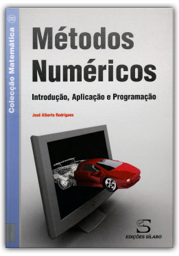
Introdução, Aplicação e Programação José Alberto Rodrigues 
Esta obra dirige-se aos alunos dos primeiros anos universitários que pretendam adquirir conhecimentos em métodos de computação numérica. Fornece aos leitores os métodos, as ideias e as ferramentas, evitando, sempre que possível, as demonstrações formais na apresentação dos processos numéricos estudados. 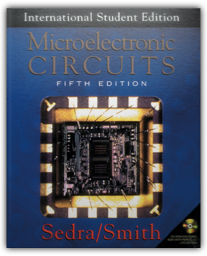
Now in a new edition, this market-leading textbook continues its standard of excellence and innovation built on the solid pedagogical foundation that instructors expect from Adel Sedra and Kenneth C. Smith. All material in the fifth edition is thoroughly updated to reflect changes in technology-CMOS technology in particular. These technological changes have shaped the book's organization and topical coverage, making it the most current resource available for teaching tomorrow's engineers how to analyze and design electronic circuits. Highlights of the Fifth Edition BLStreamlined Organizational Structure: The "must-cover" topics are placed first in each chapter; the more specialized material appears last. The first five chapters, Part I, are organized to form a coherent single-semester introductory course. Similarly, the next five chapters, Part II, present a body of material for a second one-semester course. The final four chapters, Part III, contain significant topics that can be used as enhancements or substitutes for some of the material in earlier chapters as well as resources for project or thesis work. BLMOSFETs and BJTs: Chapter 4 (MOSFETs) and Chapter 5 (BJTs) are completely rewritten. The MOSFET coverage is placed first but the two devices can be covered in any desired order. BLIC MOS and Bipolar Amplifiers: Chapter 6 (Single-Stage Integrated-Circuit Amplifiers) and Chapter 7 (Differential and Multistage Amplifiers) are completely rewritten to introduce IC MOS and bipolar amplifiers in an accessible, systematic way. BLAmplifier Frequency Response: Amplifier frequency response is now presented where needed (a "just-in-time" approach). This includes brief coverage of the frequency responses of the common source and common emitter amplifiers in Chapters 4 and 5, respectively. BEnhanced Student Support BLA new CD-packaged with every copy of the text-includes a free student version of PSpiceRG and the files for all SPICE analysis and design examples. BLRevised summary sections and many more summary tables are presented. BLNumerous new and varied review exercises and end-of-chapter problems are provided in addition to more SPICE examples with schematic captures. BLKC's Problems and Solutions for Microelectronic Circuits, 5/e, by Kenneth C. Smith (KC), offers hundreds of additional problems created by the author and solved in detail for extra student practice and review. These problems focus on the design and problem-solving skills needed by every student taking this course. (0-19-517104-7) BLLaboratory Explorations for Microelectronic Circuits, 5/e, by Kenneth C. Smith (KC), provides laboratory exercises that test students' fundamental knowledge. Employing a learn-by-doing approach and emphasizing the use of computational tools, it allows students to explore real-world engineering. (0-19-517105-5) BLAn accompanying website (http://www.sedrasmith.org) features: -SPICE Models -Links to industry and academic sites of related interest -A sample chapter available for download (Chapter 5. Bipolar Junction Transistors) Enhanced Instructor Support BLAn Instructor's Manual with Transparency Masters contains solutions to all exercises and end-of-chapter problems plus hard copy masters of transparency acetates. (0-19-517268-X) BLpowerPointRG Overheads on CD contain all of the figures with captions from the main text. (0-19-517267-1) BLTransparency Acetates offer key figures selected from the main text. (0-19-517269-8) BLText materials for subjects that are no longer covered in the text (JFETs, GaAs devices and circuits, TTL digital circuits) are included on the Student CD and the website. 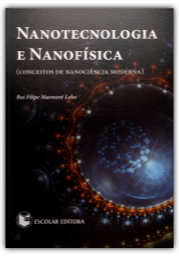
Surge em resultado das lições universitárias de Nanotecnologia proferidas pelo autor, desde 1998, e que têm vindo a ser progressivamente actualizadas, tentando acompanhar o espantoso desenvolvimento desta área científico-tecnológica, e visando simultaneamente colmatar uma lacuna de bibliografia em português sobre esta temática. 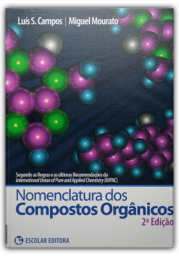
Com esta segunda edição do livro "Nomenclatura dos Compostos Orgânicos" pretendeu-se apenas corrigir algumas gralhas existentes na 1ª edição, nomeadamente ao nível das estruturas quimícas. Agradecemos a todos os professores e alunos que ajudaram a detectar muitas dessas sempre desagradáveis gralhas. Infelizmente, entre a data de saída da primeira edição e da segunda ocorreu o falecimento de um dos autores, o Professor Luís Campos, o principal mentor deste projecto. Esta edição é assim inteiramente dedicada à memória do Professor Luís Campos, que, com o rigor ciêntifico que o caracterizou, sempre se preocupou com o, por vezes negligenciado, aspecto da normalização da linguagem básica da química orgânica, harmonizando tanto o ponto de vista ciêntifico como o ponto de vista linguístico. 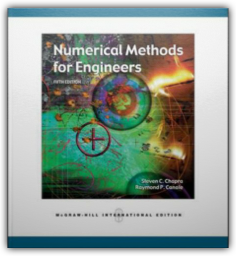
Overview 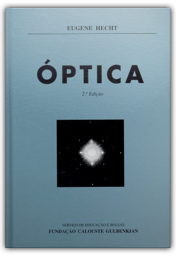
Esta nova edição constitui uma actualização e modernização significativa da anterior, como o autor frisa no seu Prefácio. A tradução procurou não só seguir o texto mas também minimizar uma certa heterogeneidade de estilos da edição anterior, que se deveu à participação de muitos colaboradores - o que não aconteceu desta vez. 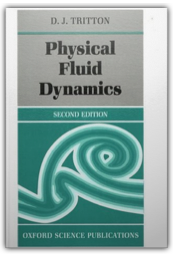
This book presents the physics of incompressible flow for the benefit of students and others who need to understand fluid motion. In this new edition, much of the material is new or rewritten, but the purpose and style of the first edition are retained. Particular emphasis is given to information obtained by experiment and observation in addition to analysis of the equations of motion. The book's primary concern is to convey a fundamental understanding of the behavior of fluids in motion. Special features include an introductory non-mathematical treatment of three particular flow configurations; extensive consideration of geophysical topics; and detailed coverage of topics that are known primarily through experimental data. Numerous photographs illustrate the phenomena discussed, and a concluding chapter demonstrates the wide applicability of fluid mechanics. New topics in the second edition include double diffusive convection and modern ideas about dynamical chaos. The discussion of instabilities has been restructured and the treatments of separation and of convection in horizontal layers considerably expanded. |
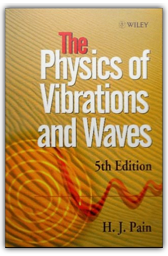
The main theme of this best-selling book is that the transmission of energy by wave propagation is fundamental to almost every branch of physics. Therefore, besides giving students a thorough grounding in the theory of wave and vibrations, the book also demonstrates the pattern and unity of a large part of physics. This new edition has been thoroughly revised with the help of Professor Lyle Roelofs of Haverford College, USA. As with earlier editions, there are large numbers of problems together with hints on how to solve them. 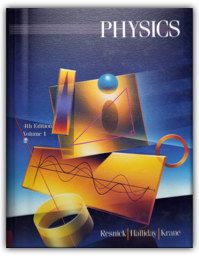
Presents a complete, accurate and rigorous study of physics while bringing it forward into the '90s and beyond. The Fourth Edition of volumes 1 and 2 is concerned with mechanics and E&M/Optics. New features include: expanded coverage of classic physics topics, substantial increases in the number of in-text examples which reinforce text exposition, the latest pedagogical and technical advances in the field, numerical analysis, computer-generated graphics, computer projects and much more. 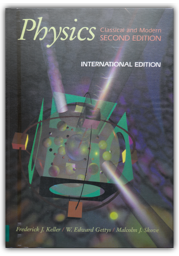
Designed for a calculus-based introductory course for engineers and scientists, this second edition retains its student oriented, specific-to-general approach which provides clear, easily understood presentations of difficult and complex materials, and uses models frequently to help explain difficult concepts. It retains its early treatment of Newton's law of gravitation and continues to feature problems where numerical methods may be used. An emphasis on problem solving and developing problem-solving strategies is supported by an abundance of solved examples, numerous end-of-chapter questions, and a 20% increase in exercises and problems. New Self-Tests with answers follow every example providing instant reinforcement for the student working through the examples. Ten modern physics highlight boxes introduce students early in the course to the excitement of modern physics supplementing the end-of-chapter commentaries retained from the first edition, and a new chapter on astrophysics augments the modern physics section. A new four colour design, over 200 additional photographs, and redesigned line art enhance student learning and complement this clearly and precisely written text.Also available are a study guide, instructor's manual/test bank (0-07-033717-9), instructor's solutions manual and OHT's (0-07-074511-0). 

|

Biblioteca X-Atomo VNF
Total:
263 Itens
263 Itens
Actualizado em:
Out 11, 2012
Out 11, 2012


 Made with Delicious Library